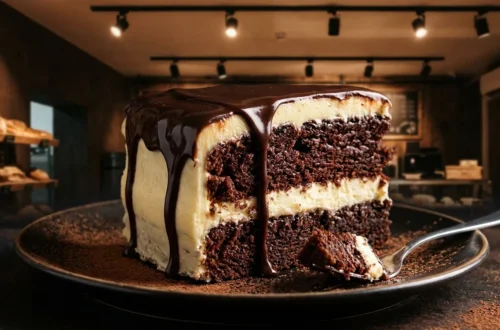
Magic cake sounds like a gimmick until you actually watch one batter separate into three distinct layers in the oven, a dense bottom, a custardy middle, and a light top, all from a single bowl of batter poured into one pan.
Why You’ll Love This Recipe
- One batter creates three distinct layers on its own
- Bright, lemony flavor that works well any time of year
- Impressive to serve without requiring advanced technique
Ingredients You’ll Need
| Ingredient | Quantity | Notes & Substitutions |
|---|---|---|
| Eggs, separated | 4 large | Room temperature whites whip better |
| Sugar | 3/4 cup | |
| Butter, melted | 1/2 cup | |
| All purpose flour | 3/4 cup | |
| Milk, warmed | 2 cups | Warm milk helps the batter blend smoothly |
| Lemon zest and juice | 1 lemon |
Pro tip: whip the egg whites to soft peaks, not stiff, and fold them in very gently. The layers form because the batter is naturally thin, and overmixing at this stage can prevent proper separation in the oven.
Kitchen Tools & Equipment
- A stand mixer or hand mixer
- An 8 inch square baking dish
- A water bath, a larger pan filled partway with hot water
Step by Step Instructions
Step 1: Prep the Ingredients
Preheat the oven to 325 degrees. Separate the eggs, keeping whites and yolks in separate bowls.
Step 2: Start the Batter
Beat egg yolks with sugar and melted butter until pale. Add flour, then slowly whisk in warm milk, lemon zest, and lemon juice until smooth.
Step 3: Add Layers of Flavor
Whip egg whites to soft peaks in a separate bowl.
Step 4: Bring It All Together
Gently fold the egg whites into the batter in stages, being careful not to deflate them. The batter will be thin.
Step 5: Serve and Enjoy!
Pour into the baking dish, set inside a larger pan with hot water reaching halfway up the sides, and bake 50 to 55 minutes, until set but with a slight jiggle. Cool completely before slicing.
Expert Tips & Common Mistakes to Avoid
Tips:
- Use a water bath. It keeps the custard layer from overcooking while the top sets properly.
- Let the cake cool fully, ideally a few hours, before slicing so the layers hold together.
Mistakes:
- Overmixing the egg whites in, which can prevent the layers from separating as they’re supposed to.
- Skipping the water bath, which risks overcooking the custardy middle layer.
Recipe Variations & Customizations
- Swap lemon for orange zest and juice for a different citrus profile.
- Add a splash of vanilla along with the lemon for extra depth.
What to Serve With This Dish
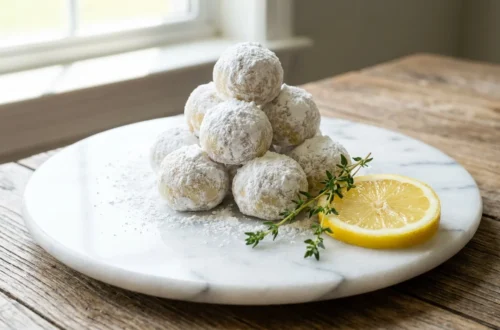
This pairs nicely with fresh berries or a scoop of lemon truffles for a fully citrus themed dessert table.
This pairs beautifully with bakery style lemon muffins for a fully lemon themed dessert table. Since the custard layer relies on eggs, cooking it to a safe temperature in the water bath matters, similar to the guidance in the USDA guidelines.
How to Store & Reheat Leftovers
Storage: store covered in the fridge for up to 4 days.
Reheating: not necessary, this is served chilled or at room temperature.
Freezing: not recommended, since the custard layer doesn’t hold its texture well after thawing.
FAQs About This Recipe
Why do the layers form on their own?
The batter is intentionally thin, and the eggs settle at different rates during baking, creating a dense bottom, custardy middle, and light top without any extra effort.
Can I make this ahead of time?
Yes, it needs to cool completely anyway, so making it a day ahead and chilling overnight actually improves the texture.
Final Thoughts
This is one of those desserts that looks far more complicated than it actually is, which makes it a good one to bring somewhere you want to impress with minimal effort.
Save this one, it’s a genuinely fun bake to watch come together.